For a long backpacking or multi-country trip, travel-health planning needs to look beyond a single destination or a simple vaccine checklist. Your risks can change as you move between countries, regions and types of accommodation, and a longer trip also raises practical questions about regular medicines, malaria prevention, food and water safety, insurance and access to healthcare. If you live in Higham Park and are preparing for an extended journey, the Mount Pharmacy travel clinic can review your itinerary and current health information before you travel. A consultation does not mean that a particular vaccine or medicine will automatically be recommended or supplied.
Why long backpacking trips need earlier planning
On a short holiday, you may stay in one place and follow a fairly predictable itinerary. Backpacking is often different. A trip might involve several countries, overnight buses or trains, rural areas, hostels, trekking, volunteering, visiting friends or relatives, and changes to the route after you have already left the UK.
That matters because travel-health advice is based on the real itinerary. The NHS advises arranging travel-health advice around 4 to 6 weeks before departure where possible. For a longer journey, starting earlier can be especially useful because some vaccine courses need more than one dose, previous vaccinations may need checking, and you may need time to organise medicines or documents. If your departure date is close, it is still worth seeking advice rather than assuming you have missed the opportunity.
Build an itinerary-based risk picture
A useful travel-health plan starts with the places you will actually visit, not just the country named on your flight ticket. Risk can vary within one country and can change with season, altitude, rural or urban travel, accommodation and activities. Stopovers can matter too, particularly when entry requirements or disease risks are relevant.
Before a consultation, write down the countries and regions you expect to visit, your approximate dates, how long you will stay in each place, whether you expect rural travel, and the activities you are planning. It is also helpful to note whether you will be staying in hostels, with family, camping or travelling far from reliable medical care. If your plans are flexible, explain the likely alternatives so the assessment can account for them.
Vaccinations and boosters to review before a long trip
There is no single list of “backpacker vaccines”. The vaccinations that may be relevant depend on your destination, previous vaccination history, age, health and what you will be doing. Routine UK vaccinations should also be up to date, because travel can expose you to infections that are circulating internationally. For a broader overview of how pre-travel vaccine decisions are made, see our complete guide to travel vaccinations.
For some itineraries, a travel-health professional may discuss vaccines such as hepatitis A, typhoid, rabies or others, but that decision needs to be destination- and person-specific. Previous doses can change what is needed, and some courses take time to complete. If hepatitis A is relevant to your route, our guide to Hepatitis A vaccination before travel explains the factors that can influence whether it is discussed.
Malaria and insect-bite planning
Malaria is not a risk everywhere, and the correct advice can vary within the same country. TravelHealthPro notes that risk can depend on factors such as location, season, activities and accommodation. Some travellers may need bite-avoidance measures only; others may also be advised to take antimalarial tablets after an individual assessment.
If malaria tablets are relevant, the choice depends on the destination as well as your medical history and other medicines. No preventive medicine is completely effective, so avoiding mosquito bites remains important. Pack an effective insect repellent, consider clothing that covers exposed skin where appropriate, and check whether your accommodation provides suitable mosquito protection. If you develop a fever while travelling in, or after returning from, a malaria-risk area, seek medical advice promptly and mention your travel history.
Medicines and a practical travel-health kit
Long trips need more medication planning than a weekend away. Check your supply of regular medicines well before departure and make sure you understand how they should be stored. Keep medicines in labelled packaging where practical and carry relevant prescription or clinical documentation, particularly when crossing several borders.
Some medicines are controlled drugs. UK guidance says that travellers carrying controlled-drug medicines should be able to prove that the medicine was prescribed for them, and destination countries can have their own import rules. Check the rules for every country you will enter or transit rather than assuming UK rules apply abroad.
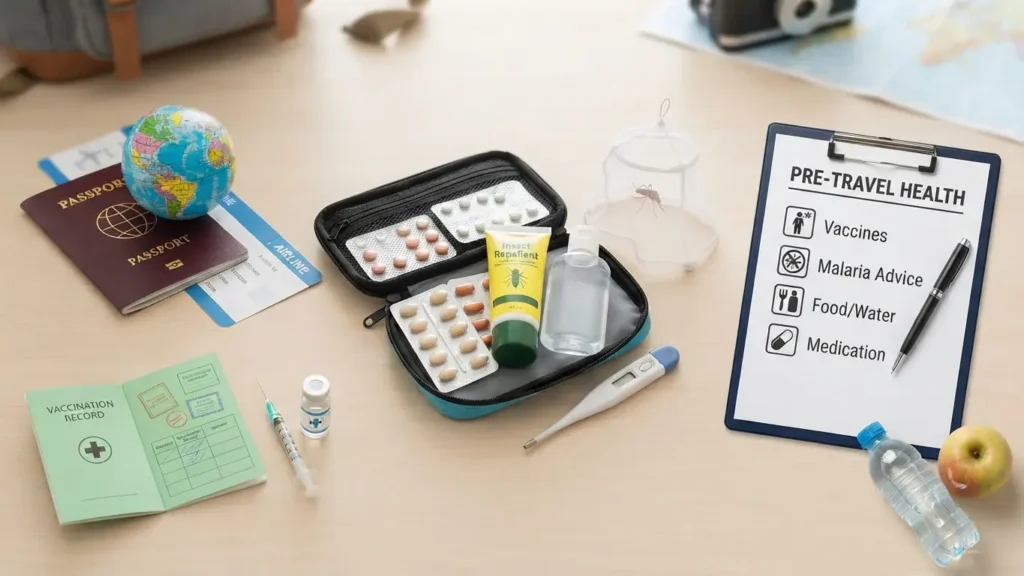
A basic travel-health kit should reflect the trip rather than follow a fixed shopping list. Depending on your needs, useful items can include first-aid supplies, oral rehydration products, insect repellent, sunscreen, hand sanitiser and any medicines you have been advised to carry. Think about where you will be able to replace supplies if your route is remote or your trip lasts several months.
Food, water and traveller’s diarrhoea precautions
Backpackers may eat in many different settings over a long trip, so repeated exposure to contaminated food or water can become an important practical risk. TravelHealthPro advises travellers to use good hand hygiene and, in places where water safety is uncertain, to take care with drinking water, ice and food preparation.
Choose food that is freshly prepared, thoroughly cooked and served hot where possible. In settings where tap water is unsafe, use appropriately treated or sealed water for drinking and brushing your teeth. Vaccination can reduce the risk of some infections, but it does not replace food and water precautions.
If diarrhoea or vomiting is severe, persistent, associated with blood, high fever, dehydration or other worrying symptoms, seek medical help. People who are pregnant, immunosuppressed, very young, older or living with certain long-term health conditions may need advice sooner.
Insurance and access to healthcare on a long itinerary
Travel insurance deserves extra attention on a backpacking trip because standard policies can have limits on how long one continuous trip can last. GOV.UK advises checking that cover applies for the full duration, every destination and the activities you plan to do, including adventure activities where relevant.
Declare relevant existing physical or mental health conditions to the insurer and check how emergency treatment, medical evacuation and repatriation are covered. If you will be travelling in remote areas, think about how quickly you could reach medical care and whether your policy covers the transport that might be needed. Keep your insurer’s emergency contact details accessible rather than only in an online account you may not be able to reach.
When to arrange travel-health advice in Higham Park
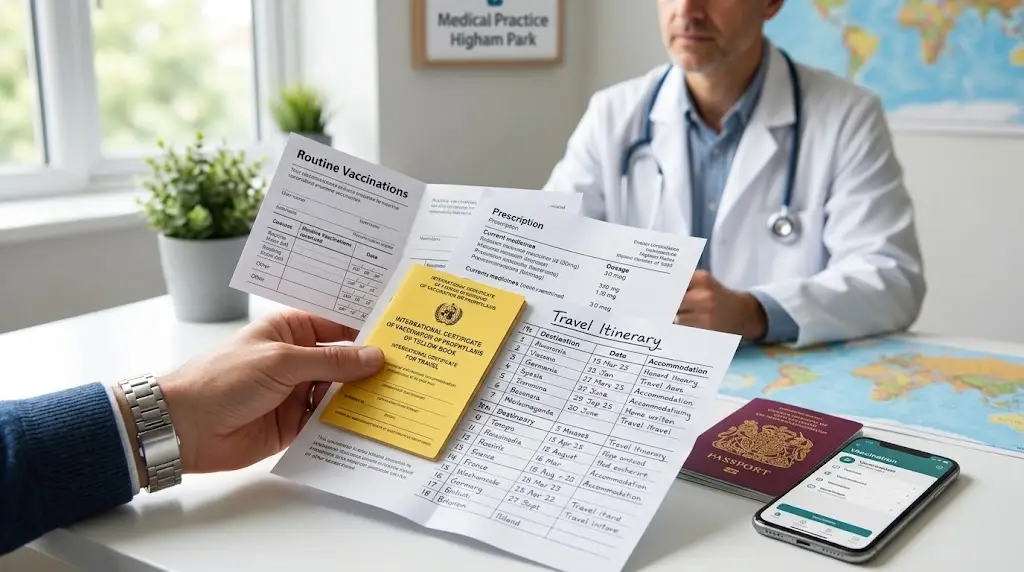
If you are planning a long backpacking trip from Higham Park, aim to arrange travel-health advice before the final weeks of preparation where possible. Bring your itinerary, travel dates, any vaccination records you can find, a list of current medicines and details of important health conditions or allergies.
The purpose of the consultation is to assess the trip you are actually planning. Advice may include vaccinations, malaria prevention, bite avoidance, food and water precautions or other practical preparation. Recommendations can change if the itinerary changes, so tell the clinician if you add a country, extend the trip or substantially change your activities.
A simple long-trip planning checklist
- List every country, region and stopover you expect to visit.
- Check routine UK vaccinations and find any previous travel-vaccine records.
- Arrange destination-specific travel-health advice, ideally 4 to 6 weeks before departure where possible.
- Check malaria guidance for each part of the itinerary rather than the trip as a whole.
- Organise enough regular medicine and the documents needed to travel with it.
- Check import rules for prescription and controlled medicines in every country you enter.
- Prepare a practical first-aid and travel-health kit for the conditions you expect.
- Buy insurance that covers the full trip length, destinations, health conditions and planned activities.
- Save details of medical facilities, insurance assistance and emergency contacts for the areas you will visit.
- Review the plan again if your route or activities change.
Frequently asked questions
How early should backpackers get travel health advice?
Ideally, arrange travel-health advice at least 4 to 6 weeks before departure. Longer or multi-country trips may benefit from earlier planning because some vaccine courses take time and your itinerary may include several different risk areas. If you are leaving sooner, it is still worth seeking advice promptly.
What vaccines might backpackers need?
There is no single backpacking vaccine list. Recommendations depend on the countries and regions you will visit, the length of your trip, accommodation, activities, previous vaccinations and your health. Routine UK vaccinations should also be reviewed.
Do I need malaria tablets for a long trip?
That depends on the exact areas you will visit and your individual circumstances. Some destinations require bite-avoidance measures only, while others may also warrant antimalarial tablets. A travel-health professional should assess the itinerary and medicine suitability.
What should be in a travel health kit?
A useful kit may include your regular medicines, copies of prescriptions or supporting documents, basic first-aid items, oral rehydration products, insect repellent, sunscreen and hand sanitiser. The exact contents should reflect your destinations, activities and health needs.
Does travel-health advice change if I visit several countries?
Yes. Health risks can vary between countries and even between regions of the same country. A multi-country itinerary should be reviewed as a whole, including stopovers, rural travel, accommodation, activities and how quickly you could access medical care.
Plan the trip, not just the first destination
A long backpacking journey can expose you to different health risks as the itinerary changes. Planning is most useful when it considers the whole route, how long you will be away, your activities, regular medicines and how easily you could get medical care. Travellers in Higham Park can use the Mount Pharmacy travel clinic as the local next step for an itinerary-based assessment before departure. Vaccines, malaria prevention and other measures are recommended only when appropriate to the individual traveller and current destination guidance.
Medical disclaimer
This article provides general travel-health information and is not a personal diagnosis, prescription or substitute for an individual travel-health assessment. Vaccine recommendations, malaria prevention, medicine suitability and destination rules depend on your itinerary and health circumstances and can change. Seek current professional advice before travel and urgent medical care if you become seriously unwell.