Planning a trip abroad is exciting, but preparing your health before you travel is just as important as booking flights, hotels, and travel insurance. If you are looking for travel vaccination in Higham Park, it is worth understanding the key steps you should take before departure to reduce your risk of illness while away.
Whether you are travelling for a holiday, business, pilgrimage, backpacking, volunteering, or visiting friends and family abroad, good travel health preparation can help you travel with more confidence. Henlow Pharmacy provides travel health advice and vaccination support for patients looking for travel vaccination services near Higham Park and surrounding areas.
Below are our top 10 travel health tips to help you prepare safely before travelling.
1. Check Which Travel Vaccines You May Need Early
One of the most important travel health steps is checking whether your destination requires or recommends any travel vaccines. Different countries carry different health risks, so the vaccines you may need depend on where you are going, how long you are staying, what you will be doing, and your previous vaccination history.
The NHS advises getting travel health advice at least 4 to 6 weeks before travel, because some vaccines need multiple doses and others take time to build protection.
Common travel vaccines that may be discussed include:
- Hepatitis A
- Typhoid
- Hepatitis B
- Rabies
- Cholera
- Japanese encephalitis
- Tick-borne encephalitis
- Meningitis ACWY
- Yellow fever, where applicable through authorised centres
If you are looking for travel vaccination in Higham Park, booking early gives you more time to complete any recommended vaccine schedule before your trip.
2. Get Destination-Specific Travel Advice
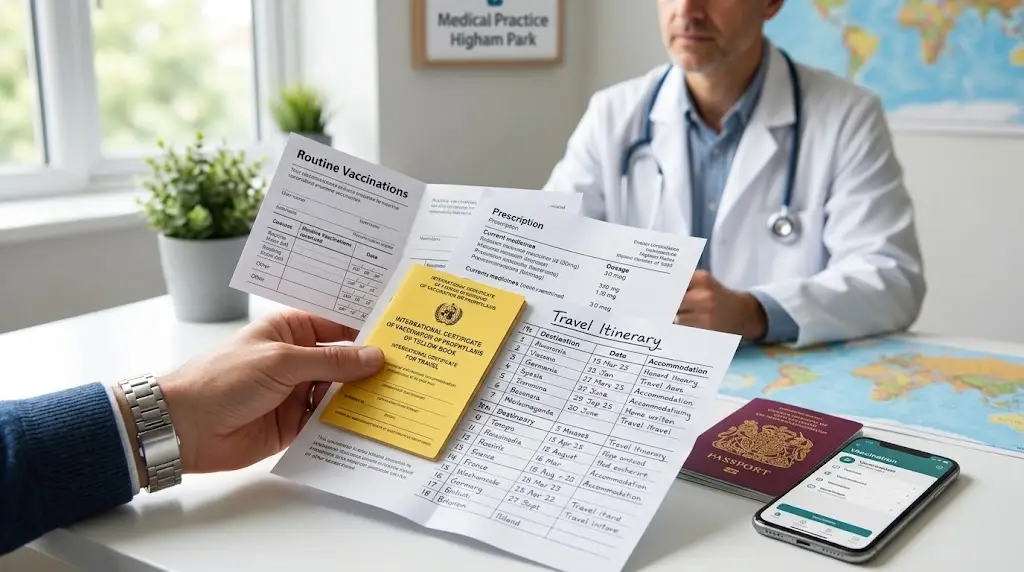
Travel health advice should always be based on your exact destination and itinerary. Two people travelling to the same country may have very different risks depending on whether they are staying in a resort, visiting rural areas, backpacking, working abroad, or staying with family.
NaTHNaC’s TravelHealthPro provides destination-specific vaccine recommendations and travel health advice for travellers and healthcare professionals in the UK.
Before your consultation, try to know:
- Countries you are visiting
- Travel dates
- Length of stay
- Rural or city travel
- Accommodation type
- Planned activities
- Stopovers or transit countries
- Whether you will be visiting friends or relatives
- Any previous vaccination records
This helps the pharmacist provide advice that matches your real travel risk.
3. Do Not Leave Travel Vaccines Until the Last Minute
Last-minute travel is common, but it can limit your options. Some vaccines need more than one dose, and your body may need time to build immunity after vaccination.
If you leave vaccinations too late:
- You may not complete the full course
- You may not be fully protected before departure
- Some vaccines may not have enough time to work
- You may feel more rushed and less prepared
The NHS notes that leaving vaccination until the last minute may mean you are not fully protected when you travel.
However, if your trip is soon, you should still seek advice. Even last-minute consultations can help with vaccine options, malaria advice, insect bite prevention, food and water safety, and travel medicine guidance.
4. Check Whether You Need Malaria Advice
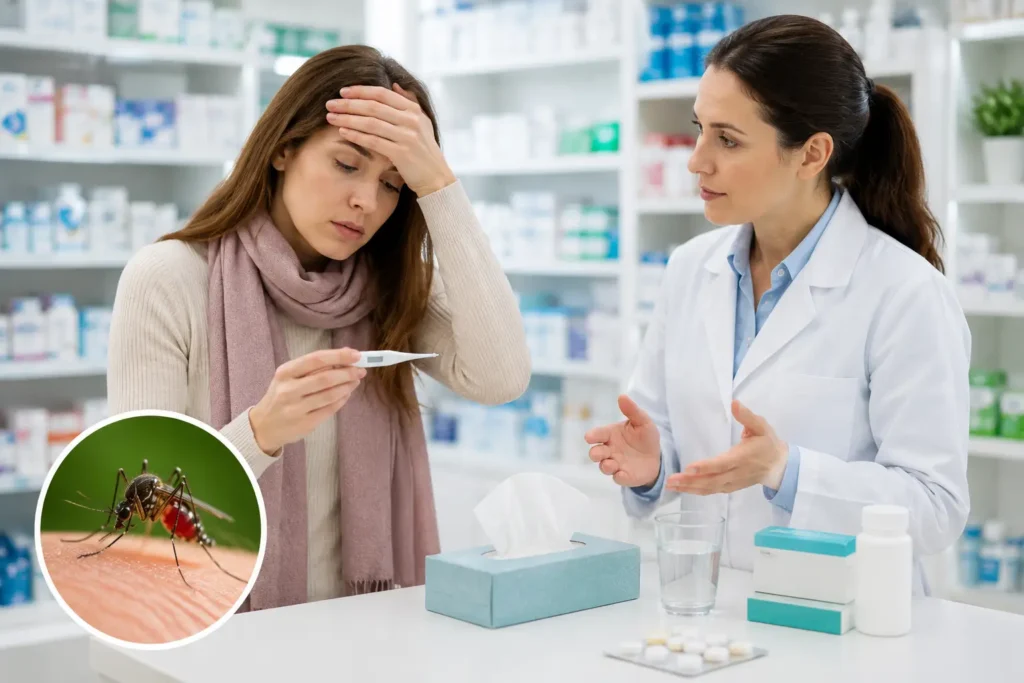
Vaccines are only one part of travel health. Some destinations carry a malaria risk, and travellers may need advice about mosquito bite prevention and malaria prevention tablets.
TravelHealthPro explains that UK malaria guidance is regularly reviewed by the UK Health Security Agency’s UK Malaria Expert Advisory Group.
You may need malaria advice if you are travelling to parts of:
- Africa
- Asia
- Central America
- South America
- The Caribbean
- The Middle East
Malaria prevention may include:
- Antimalarial tablets where recommended
- Insect repellent
- Long sleeves and trousers
- Mosquito nets
- Air-conditioned or screened accommodation
- Avoiding bites during peak mosquito activity times
If you are searching for travel vaccination in Higham Park, it is sensible to ask about malaria risk during your travel health consultation.
5. Protect Yourself From Mosquito-Borne Illnesses
Malaria is not the only mosquito-borne illness travellers should consider. Dengue, Zika, chikungunya, and Japanese encephalitis can also be relevant depending on destination.
TravelHealthPro provides country-specific advice and information on mosquito-borne risks such as dengue and malaria.
To reduce mosquito bites:
- Use insect repellent
- Wear long sleeves and trousers
- Use mosquito nets where needed
- Stay in accommodation with screens or air conditioning
- Avoid standing water where mosquitoes breed
- Follow destination-specific guidance
Mosquito bite prevention is especially important for pregnant travellers or those planning pregnancy, because some infections can carry additional risks.
6. Be Careful With Food and Water
Food and water-related illness is one of the most common travel health concerns. Some infections, including typhoid and hepatitis A, can spread through contaminated food or water.
TravelHealthPro notes that typhoid vaccination may be recommended for travellers whose activities put them at higher risk in areas where sanitation and food hygiene are likely to be poor.
To reduce risk:
- Drink bottled or treated water where needed
- Avoid ice if water safety is uncertain
- Eat food that is freshly cooked and served hot
- Be cautious with street food
- Avoid raw salad or unpeeled fruit in higher-risk areas
- Wash hands regularly
- Carry hand sanitiser
Even if you are vaccinated, food and water hygiene still matters because vaccines do not protect against every stomach infection.
7. Make Sure Routine UK Vaccines Are Up to Date
Travel health is not only about specialist travel vaccines. Before travelling, it is also important to check whether your routine UK vaccinations are up to date.
These may include:
- Tetanus
- Diphtheria
- Polio
- Measles, mumps and rubella
- COVID-19, where relevant
- Flu, where relevant
Some destinations may have outbreaks of vaccine-preventable diseases, and travellers who are not up to date may be at increased risk.
A travel health consultation can help identify whether routine vaccine status should be checked before your trip.
8. Think About Your Personal Health Risks
Travel vaccine advice is not one-size-fits-all. Your personal health can affect what vaccines or precautions are suitable.
You should mention if you are:
- Pregnant
- Breastfeeding
- Immunocompromised
- Taking regular medication
- Living with a long-term condition
- Allergic to any medicines or vaccines
- Travelling with children
- Elderly or travelling with elderly relatives
TravelHealthPro advises that pregnant women should avoid travel to malarious areas where possible because of increased malaria risks. If travel is unavoidable, specialist advice is important.
This is why a proper consultation is important before vaccination.
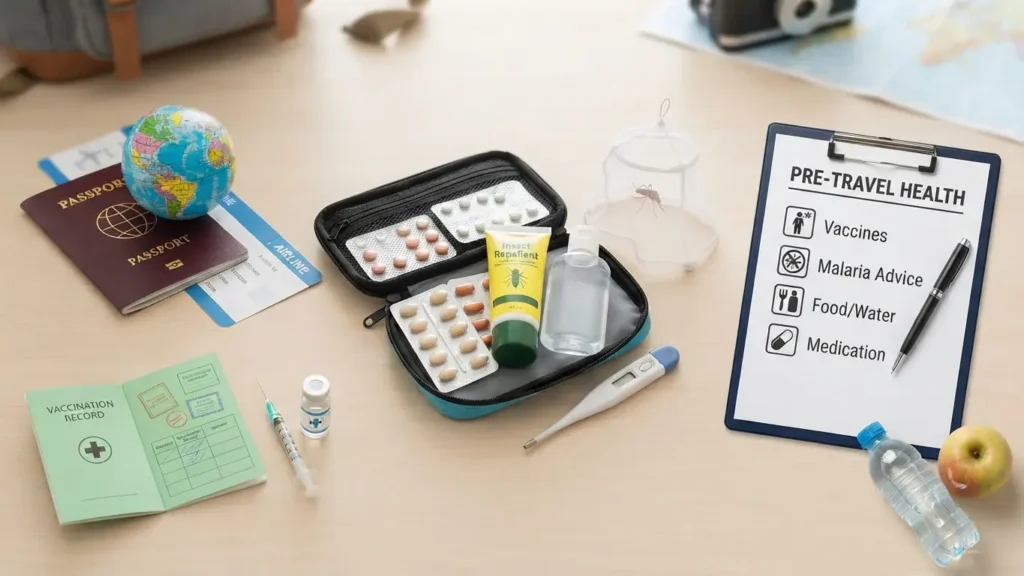
9. Prepare a Travel Health Kit
A simple travel health kit can save stress while you are abroad.
Useful items may include:
- Regular prescription medication
- Pain relief
- Anti-diarrhoea medicine
- Oral rehydration salts
- Plasters and dressings
- Antiseptic wipes
- Insect repellent
- Sunscreen
- Hand sanitiser
- Motion sickness tablets if needed
- Allergy medication if needed
- Copies of prescriptions
You should also check whether your medication is legal in the country you are visiting, especially if you take controlled or specialist medicines.
10. Book a Travel Health Consultation Before You Go
The best way to prepare is to speak to a travel health professional before travelling. A consultation can help you understand which vaccines, malaria precautions, and travel health measures may be relevant for your destination.
For patients searching for travel vaccination in Higham Park, Henlow Pharmacy can support with travel health advice and vaccination guidance based on your itinerary and individual risk.
A travel consultation may cover:
- Destination-specific vaccine recommendations
- Malaria prevention advice
- Food and water safety
- Mosquito bite prevention
- Travel health risks for children or pregnant travellers
- Vaccine schedules
- Private vaccine options
- General travel safety advice
Booking early gives you the best chance of being fully prepared.
Why Choose Henlow Pharmacy for Travel Vaccination Advice?
Henlow Pharmacy supports patients looking for travel health advice and travel vaccination in Higham Park by offering practical, professional guidance before travel.
Patients choose Henlow Pharmacy because we provide:
✔ Destination-specific travel health advice
✔ Private travel vaccination support
✔ Clear guidance on vaccine timing
✔ Malaria and mosquito bite prevention advice
✔ Support for families, business travellers, and last-minute travellers
✔ Friendly and confidential pharmacy consultations
Whether you are travelling for a short break, long-haul holiday, pilgrimage, backpacking trip, or family visit abroad, preparation can help reduce your risk of travel-related illness.
Frequently Asked Questions
When should I book travel vaccinations?
You should ideally seek travel health advice at least 4 to 6 weeks before travelling, because some vaccines need time to work and some require more than one dose.
Can I still get travel vaccines last minute?
Yes. It is still worth seeking advice even if your trip is soon. Some protection or practical travel health advice may still be possible.
Which travel vaccines do I need?
This depends on your destination, itinerary, previous vaccines, medical history, and planned activities. Destination-specific advice is important.
Are travel vaccines free on the NHS?
Some travel vaccines are available free on the NHS, while others are private and need to be paid for.
Do I need malaria tablets?
This depends on your destination and travel plans. Some travellers may need antimalarial tablets as well as mosquito bite prevention advice.
Do travel vaccines protect against every illness?
No. Travel vaccines protect against specific diseases, but travellers still need to follow food safety, water hygiene, insect bite prevention, and general travel health advice.
Conclusion
If you are looking for travel vaccination in Higham Park, planning ahead is the best way to protect your health before travelling abroad. Travel vaccines, malaria advice, food and water safety, mosquito bite prevention, and routine vaccine checks can all form part of a safe travel plan.
Henlow Pharmacy provides professional travel health advice and vaccination support for patients preparing for trips abroad. Whether your journey is planned months ahead or coming up soon, our pharmacy team can help you understand what steps to take before departure.